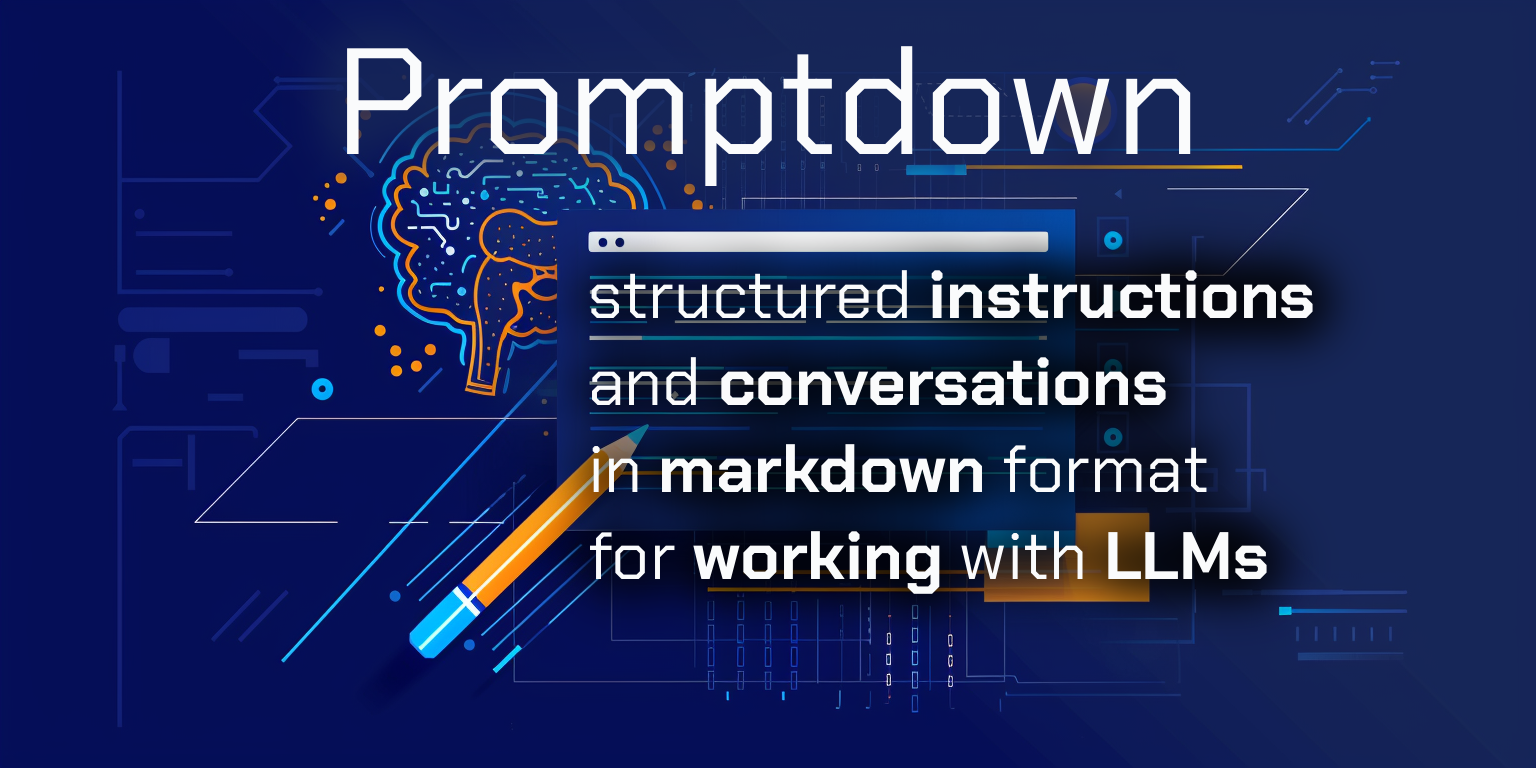
Writing complex prompts shouldn't feel like guessing. I built this to treat prompts like code—structured, modular, and written in markdown, so you can compose and test them with the same rigor as your Python logic.
A collection of open-source tools, libraries, and experiments I've built.
Writing complex prompts shouldn't feel like guessing. I built this to treat prompts like code—structured, modular, and written in markdown, so you can compose and test them with the same rigor as your Python logic.
Ever tried to get an LLM to read its own API docs? It's a mess. This CLI tool grabs the massive OpenAI spec and compiles it into clean, deterministic, AI-friendly HTML blocks that your agents can actually understand and use.
Feeding random text to an LLM is easy; building a reliable knowledge base is hard. This tool automates the creation of structured, domain-specific knowledge "compendiums" to ground your AI applications in reality.
Need to test an HR system? Generating believable test data is a pain. `fakedin` uses AI and Faker to hallucinate shockingly realistic résumés and job descriptions that look and feel like the real thing.
An experiment in generative storytelling. It takes an image and uses multimodal LLMs to weave a dynamic, unfolding narrative around it, creating a feedback loop between visual and textual creativity.
Stop re-running your expensive data processing steps every time you change one line of code. This tool intelligently caches intermediate steps in your pipeline, letting you iterate on the end of your workflow instantly.
Sometimes you just need to feed your entire codebase into ChatGPT. Coderoller smashes your whole source tree into a single, organized Markdown file so you can drag-and-drop your context in one go.
A complete AI recruiting workspace I built with Django and Celery. It used explainable AI to match resumes to job descriptions before that was cool.
A specialized Django application for translating Gurmukhi text to English, focused on preserving the nuances of the original script.
Before OpenAI had an official Swift library, I built this. It offered a clean, Swifty interface for chat completions, embeddings, and token management.
An experimental system for generating procedural music based on "style genotypes," allowing you to breed songs like digital plants.
A procedural generation engine for creating 2D sci-fi spaceship sprites. Useful for populating game worlds with infinite unique vessels.
Generates those little mechanical details (greebles) that make sci-fi surfaces look complex. A fun exercise in recursive 2D geometry.
A Swift library for modeling and generating aesthetic concepts like color palettes and schemes, making generative art more harmonious.
A tool for procedural text generation—names, places, items. Perfect for when you need a thousand unique names for your RPG NPCs.
A utility belt for Swift Strings. It adds all those missing convenience methods you wish the standard library had for text manipulation.
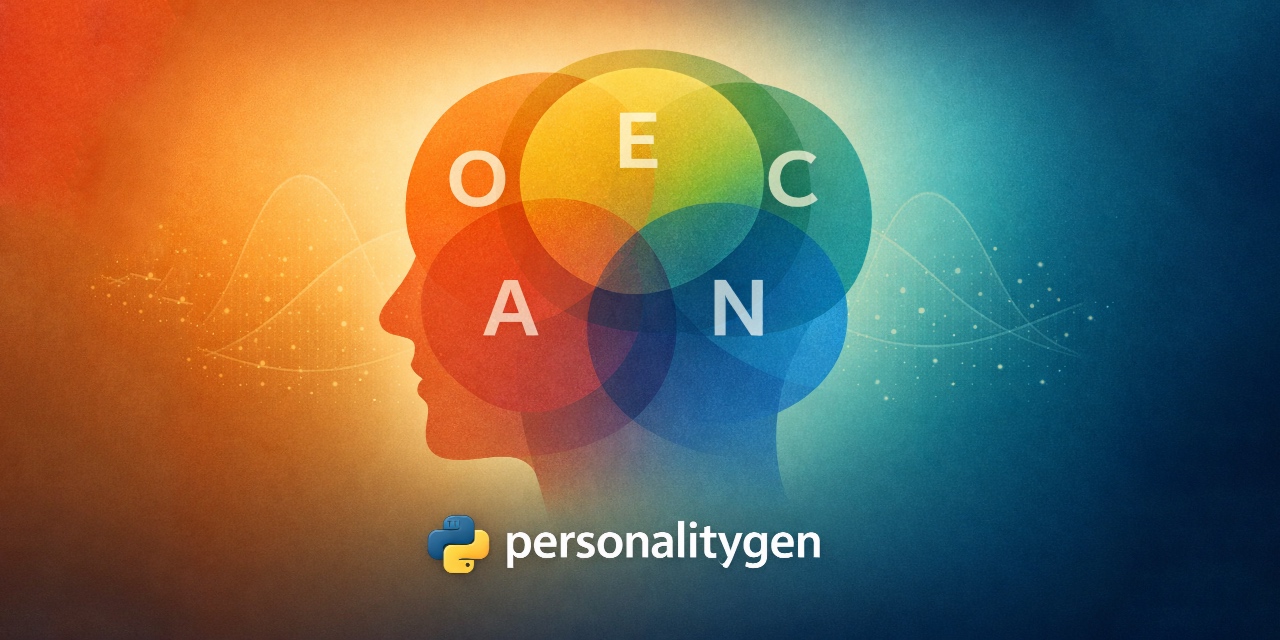
Simulates human-like personalities using the Big Five (OCEAN) model. Great for giving game characters distinct behavioral traits.
RNG is boring. This library provides sophisticated randomness tools, including Gaussian distributions and probability bags, for more organic procedural generation.